Why Your CRM Is a Mess (And How Marketing Ops Fixes It)
June 12, 2026
Sales and Marketing Alignment: How Lean Teams Build One Revenue System
July 7, 2026
GTM Strategies for Companies Without a Head of Marketing
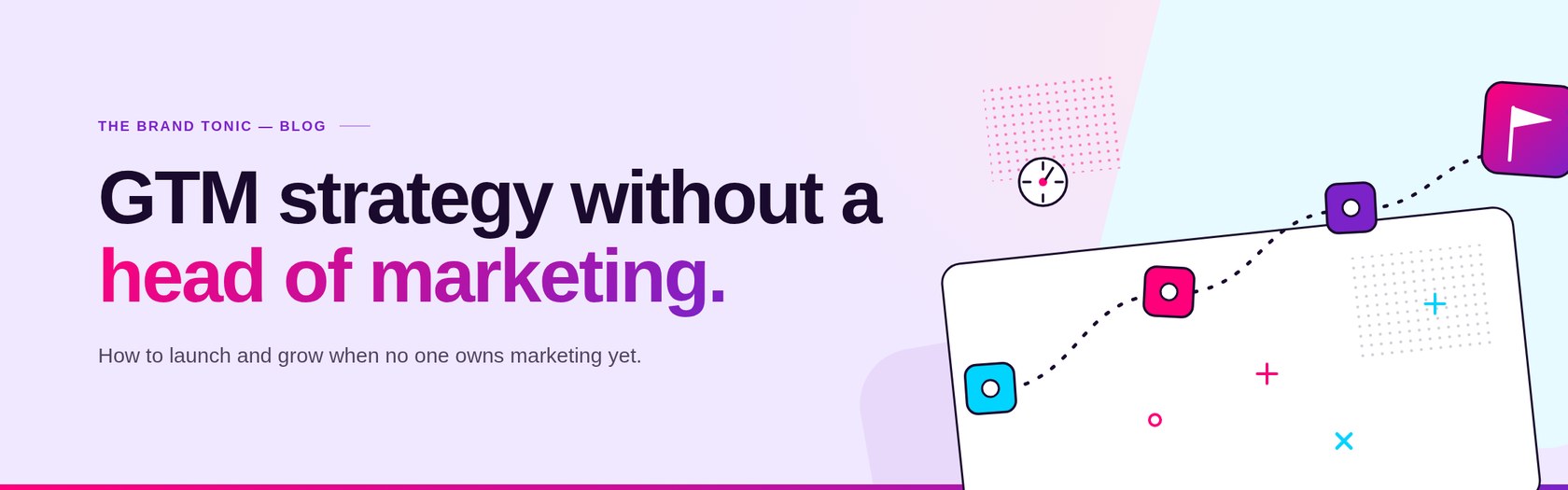
You do not need a full-time head of marketing to run a real go-to-market strategy. You need the right framework and an owner. Here is how.
Go-to-market strategy gets talked about like it belongs to companies with a VP of Marketing and a planning team. So when you do not have a head of marketing, GTM can feel out of reach, something you will do properly later, once you have hired someone senior to run it. In the meantime, you launch features, chase leads, and react.
That instinct is backwards. A go-to-market strategy is most valuable precisely when you do not yet have a marketing leader, because it is the thing that keeps a lean company from wasting its limited time and budget guessing. You do not need a full-time head of marketing to run a real GTM. You need the right framework and someone to own it. This guide walks through both.
The short answer
A go-to-market strategy is your plan for how you reach a specific market, position your offering, and convert buyers, before you spend money executing. A company without a head of marketing can absolutely run one by working through five decisions: who you are targeting, the problem you solve and how you are positioned, your message, the few channels you will use to reach buyers, and how you will convert and measure. The constraint is not seniority, it is focus and ownership. Make the decisions deliberately and assign someone to own them, and you have a GTM.
Why GTM matters more, not less, without a marketing leader
When you have a senior marketing team, some strategic thinking happens informally; experienced people course-correct as they go. Without that layer, there is no safety net. Every dollar and hour you spend without a GTM is a guess, and lean companies cannot afford many guesses.
A go-to-market strategy is how a small company makes its limited resources count. It forces the decisions that prevent the most common and expensive mistake at this stage: spreading thin effort across too many audiences, messages, and channels, and getting traction in none of them. GTM is not a luxury you earn after hiring. It is how you avoid wasting the budget you would use to hire.
The GTM framework, decision by decision
A go-to-market strategy is really five decisions made deliberately instead of by default.
Decision 1: Who exactly are you going to market to
The first and most important decision is the narrowest. Not your whole addressable market, your beachhead: the specific segment that is easiest to win and most valuable to win. Get concrete. “Operations leaders at 20 to 60 person SaaS companies that just raised a seed round” is a GTM target. “Businesses that need marketing” is not. The narrower your initial target, the more efficient everything downstream becomes.
Decision 2: What problem do you solve, and how are you positioned
Define the specific problem you solve for that segment and how you are positioned against the alternatives, including the alternative of doing nothing. Positioning is the decision about what you want to be known for and why a buyer should pick you over the other options. Without it, your marketing competes on noise instead of clarity.
Decision 3: What is your core message
Translate your positioning into a message your market will actually understand and remember. One or two consistent ideas, repeated everywhere, beats a different pitch on every channel. This is the decision that makes your limited marketing feel coherent instead of scattered, which matters even more when you do not have a team to hold it together.
Decision 4: Which few channels will you use to reach them
With your target and message set, choose the small number of channels where that specific buyer actually pays attention and that you can realistically sustain. A company without a marketing leader should run two or_three channels well, not six badly. Pick based on where your beachhead segment already is, not on what is trendy.
Decision 5: How will you convert and measure
Decide what happens when you have someone’s attention: the path from interested to customer, and the one or two numbers that tell you whether the GTM is working. Tie those numbers to a business outcome, demos, qualified leads, signups, and review them regularly so you can adjust. A GTM you do not measure is a guess with extra steps.
The missing piece: ownership
Here is the trap. A company without a head of marketing can make all five decisions and still fail, because no one owns driving the GTM forward. Strategy with no owner drifts back into reactive execution within weeks.
You have three realistic options for ownership:
- A founder or leader takes it on directly. Workable early, but it competes with everything else on their plate and rarely gets the focus it needs.
- You hire a full-time head of marketing. The eventual answer for many companies, but expensive, slow to hire, and often premature.
- You bring in a fractional marketing leader. Senior ownership of the GTM strategy and its execution, part-time, without the cost and commitment of a full-time hire. For most growing companies in exactly this position, this is the most efficient path: the strategic seniority to set the GTM and the accountability to drive it, scaled to your stage.
The point is that the framework is only half the job. Someone has to own it.
What this looks like in practice
A startup with a strong product and no head of marketing was launching features into a void, announcing things to an audience it had never clearly defined, and wondering why nothing landed. The founders assumed they needed to hire a marketing VP before they could “do GTM properly.”
Instead, they worked through the five decisions with a fractional marketing leader. They narrowed to one beachhead segment, sharpened their positioning, locked a core message, chose two channels, and defined how they would convert and measure. The fractional leader owned driving it. Within two quarters, the same product, now sold with a real GTM, was landing with the specific buyers it was built for. They never made the premature VP hire, and did not need to.
Frequently asked questions
Can you do go-to-market without a head of marketing? Yes. A GTM is a set of decisions, who you target, how you are positioned, your message, your channels, and how you convert and measure, that any focused company can make. What you cannot skip is ownership: someone has to drive the strategy forward. Many companies run a strong GTM with a founder or a fractional marketing leader owning it, long before they hire a full-time head of marketing.
What is the difference between a go-to-market strategy and a marketing strategy? A go-to-market strategy is specifically about how you bring an offering to a market: targeting, positioning, channels, and conversion for a product or launch. A marketing strategy is the broader, ongoing plan for how marketing drives the business. GTM is often the sharp tip of the marketing strategy, focused on reaching and winning a specific market.
Who should own GTM if we don’t have a marketing leader? Realistically, a founder or senior leader in the short term, or a fractional marketing leader who can own both the strategy and its execution part-time. The key is that ownership is explicit and held by someone with enough seniority to make the calls. Unowned GTM reverts to reactive marketing fast.
How narrow should our initial GTM target be? Narrower than feels comfortable. Pick the single segment that is easiest and most valuable to win first, your beachhead, and concentrate there. A narrow target makes your message sharper, your channels clearer, and your limited budget far more efficient. You expand to broader markets after you win the first one, not before.
The bottom line
A go-to-market strategy is not reserved for companies with a marketing department. It is five deliberate decisions, target, positioning, message, channels, and conversion, plus an owner to drive them. Without a head of marketing, GTM matters more, because you have no safety net for wasted effort. Make the decisions on purpose and give them a clear owner, and a lean company can go to market as sharply as a large one.
If you need the strategy and the ownership without a full-time hire, that is exactly what we provide. See how at The Brand Tonic’s Marketing Strategy Consulting, or book a call to build your go-to-market plan.